How DTC and Supplement Brands Are Using Direct Injection to Turn a Supply Chain Shift Into International Growth
You moved manufacturing out of China. Most brands make the same mistake next.
Published: Mar 26, 2026
Last Edited: Mar 26, 2026
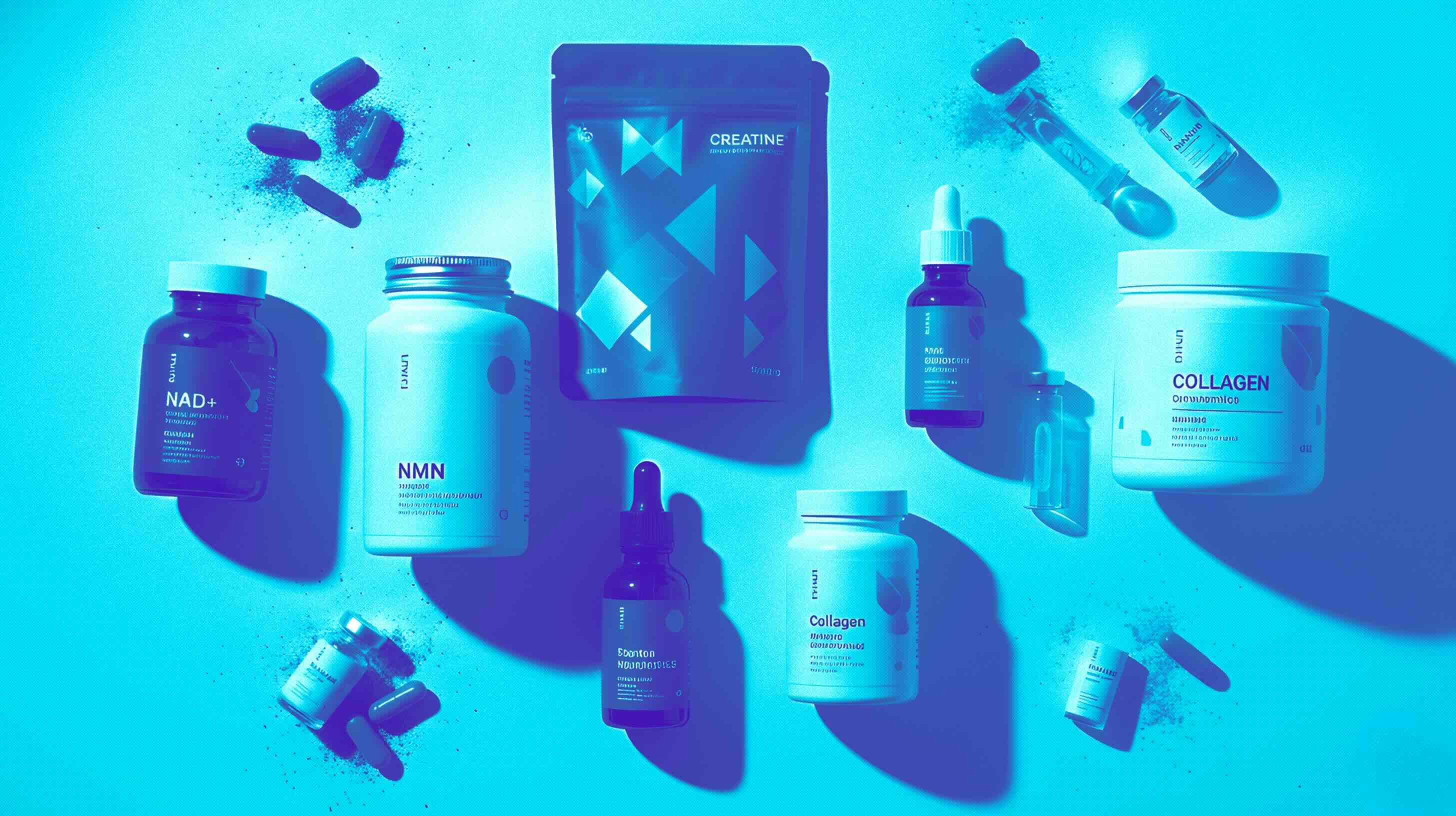

The longevity space is booming. NMN, NAD+, berberine, creatine, collagen peptides, Lion's mane — brands are scaling faster than almost any other DTC vertical right now. And most of them started the same way: manufacturing in China, shipping globally through direct injection or traditional freight networks, and growing as fast as the supply chain would let them.
It works, until it doesn't. Supply chains aren't linear, they're dynamic. Middle East disruptions are pushing fuel costs through the roof, with airlines like Cathay Pacific doubling their fuel surcharges out of Hong Kong as of March 2026, with no end in sight. Rising air freight costs are compressing margins on the very model that got you here, and the brands that don't adapt will feel it first.
The shift every supplement brand hits
Here's the thing about the longevity space: many of these supplements can be shipped internationally to individual consumers under personal importation rules. That's what makes direct injection from China so effective in the early stages. Brands scale quickly, customers receive products that aren't yet available locally, and the model works.
But then the regulatory landscape shifts. In December 2025, the TGA approved NMN for domestic sale in Australia for the first time — a landmark decision ending years of uncertainty in which the supplement could be manufactured locally but only exported overseas. The floodgates open for Australian manufacturers to sell direct into their home market. Major national retailers move fast: Chemist Warehouse begins stocking longevity products on shelf, with Australian-made brands like Melrose FutureLab and Switch Nutrition among the first to launch nationally.
For brands that built their entire operation around Chinese manufacturing and cross-border shipping, this changes everything. The competitive advantage of being the only way for customers to access these products disappears. Now they're competing against local players with faster delivery, no import complexity, and retail distribution.
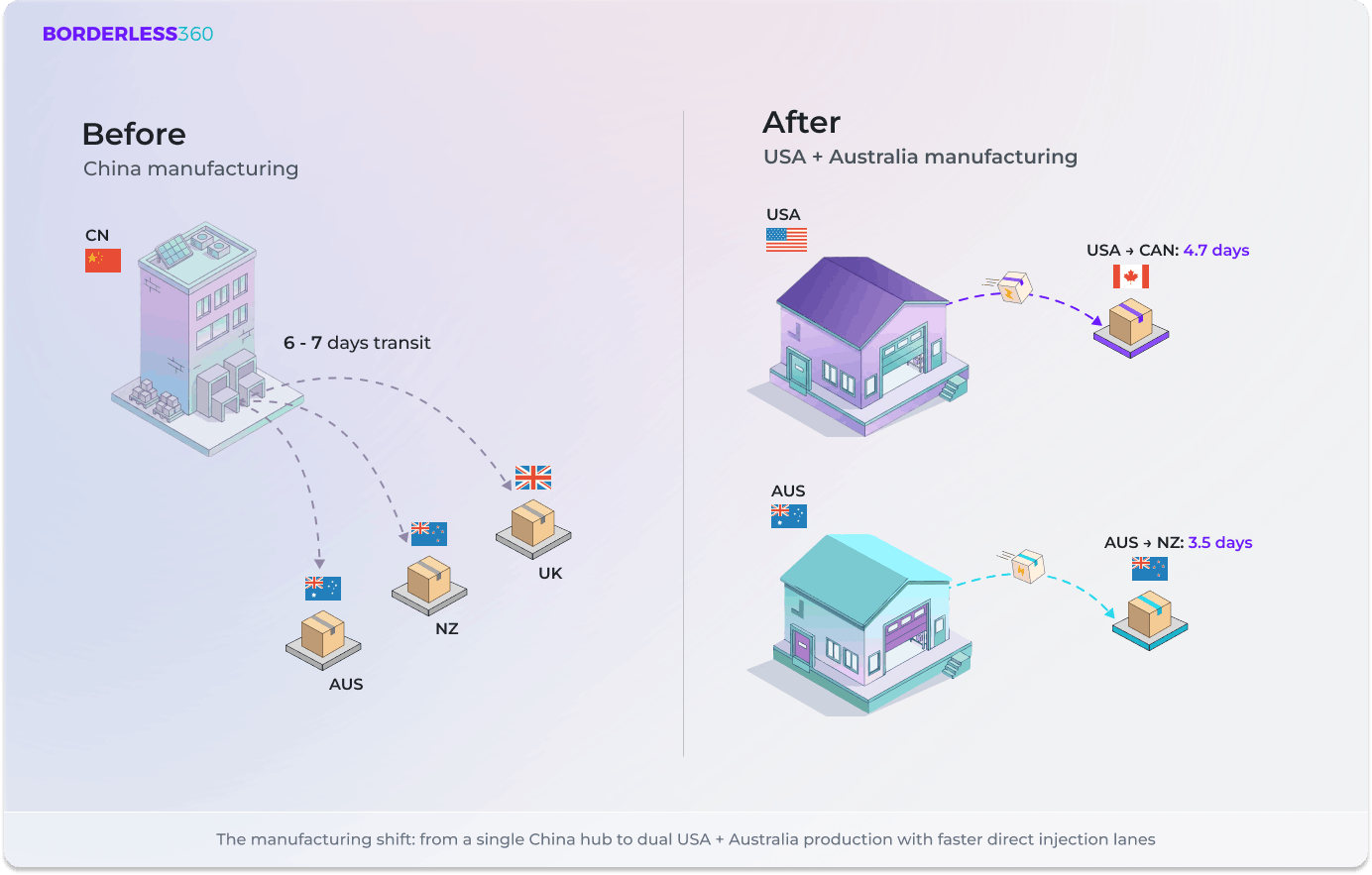
This is the moment that forces the manufacturing shift. Production moves closer to key markets, the USA, Australia, or both, to meet local compliance, reduce risk, and compete on a level playing field. Most brands treat this as a logistics problem to solve. Find a new 3PL in the USA. Find another one in Australia. Patch it together and hope it works.
The brands pulling ahead right now are doing something different.
Don't lose what got you here
The mistake a lot of brands make is retreating to a single market. They shift manufacturing, set up local fulfilment, and quietly let their international volumes drop.
But that ignores the very thing that built their business: an international setup powered by direct injection shipping. When your manufacturing moves from China to the USA or Australia, your direct injection capabilities don't disappear. They get better. You're shipping from locations with stronger carrier networks, faster transit lanes, and in many cases, lower costs than the original China setup.
Direct injection is still the growth machine. The geography just changed. And that change should be used as a competitive advantage, not a reason to scale back. You use direct injection to drive serious volume into nearby markets, build density in those lanes, and scale to a point where local fulfilment in a new country becomes viable. It's not one or the other. It's direct injection first, local fulfilment when the volume justifies it.
Why end-to-end tracking matters for direct injection
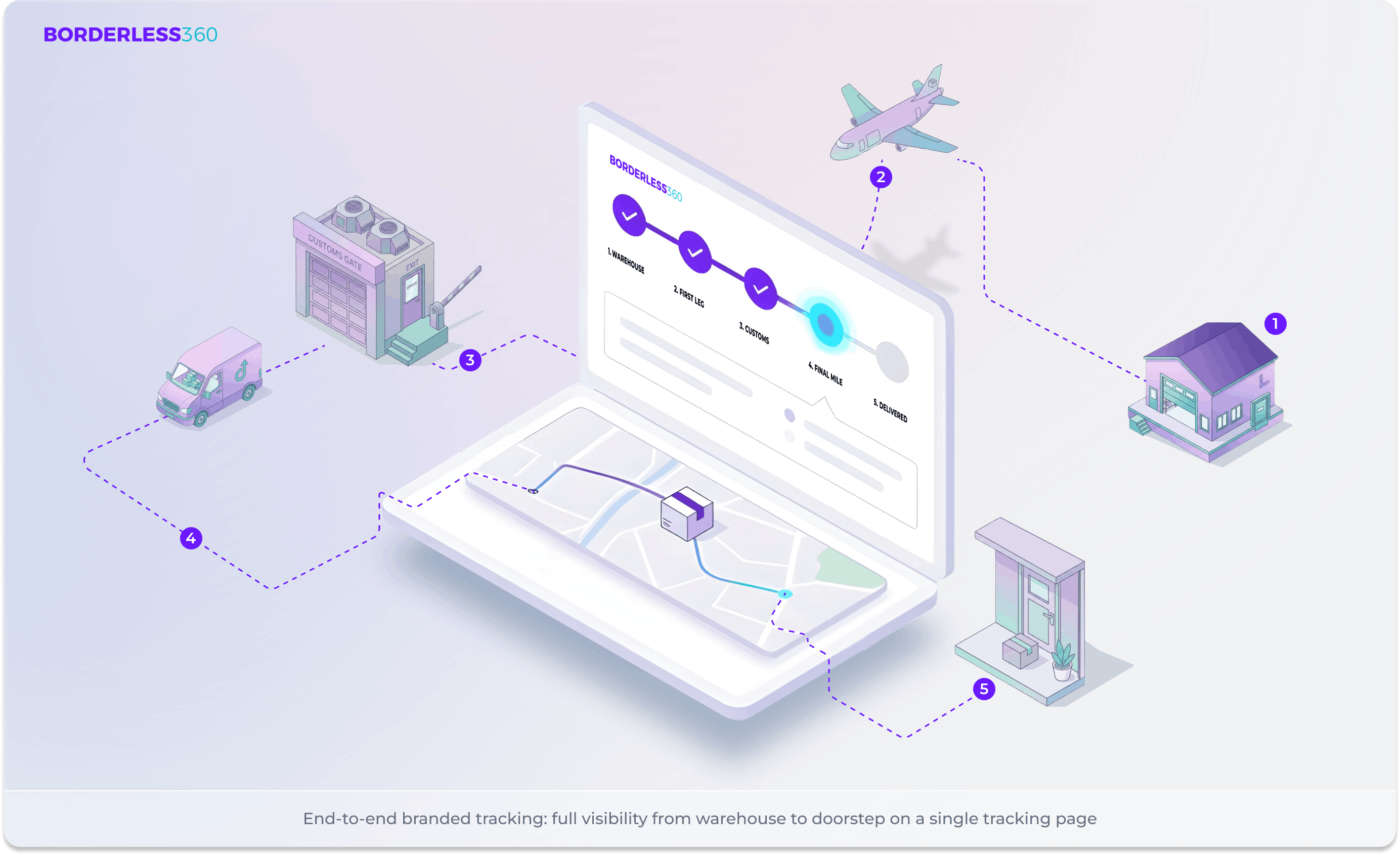
One thing that's often overlooked with direct injection is the customer experience during transit. Most providers lose visibility on the first leg, the international freight movement from origin to destination country. The customer sees nothing until their parcel enters the domestic carrier network. For a shipment that takes 4 to 7 days, that's potentially half the journey with no tracking updates.
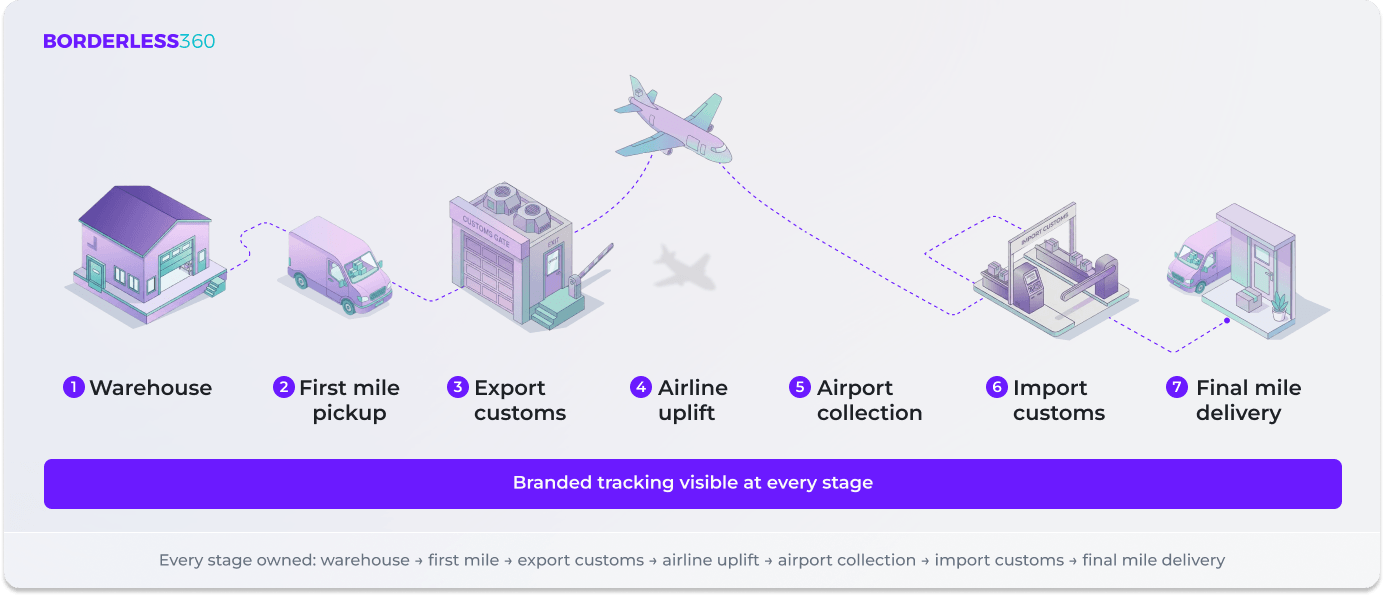
End-to-end branded tracking changes this completely. From the moment an order leaves the warehouse, through the international first leg, customs clearance, and handover into the domestic carrier network, the customer sees every stage on a single branded tracking page. It builds trust, reduces support enquiries, and turns what would otherwise be a black box into a transparent, premium experience.
When you're using direct injection as your primary international shipping method, this isn't a nice-to-have. It's essential.
Same model. New geography. Faster results.
We've seen this play out firsthand. One supplement brand started from virtually zero, shipping a couple of hundred orders a month. Using our proprietary direct injection service from Hong Kong, they scaled to well in excess of tens of thousands of orders a month into Australia, New Zealand, and the UK. The transit times from Hong Kong were strong: Australia in around 6 to 7 days, UK in 5.7 to 6 days, and New Zealand in around 6 days. That speed, combined with the direct injection model, is what fuelled their growth.
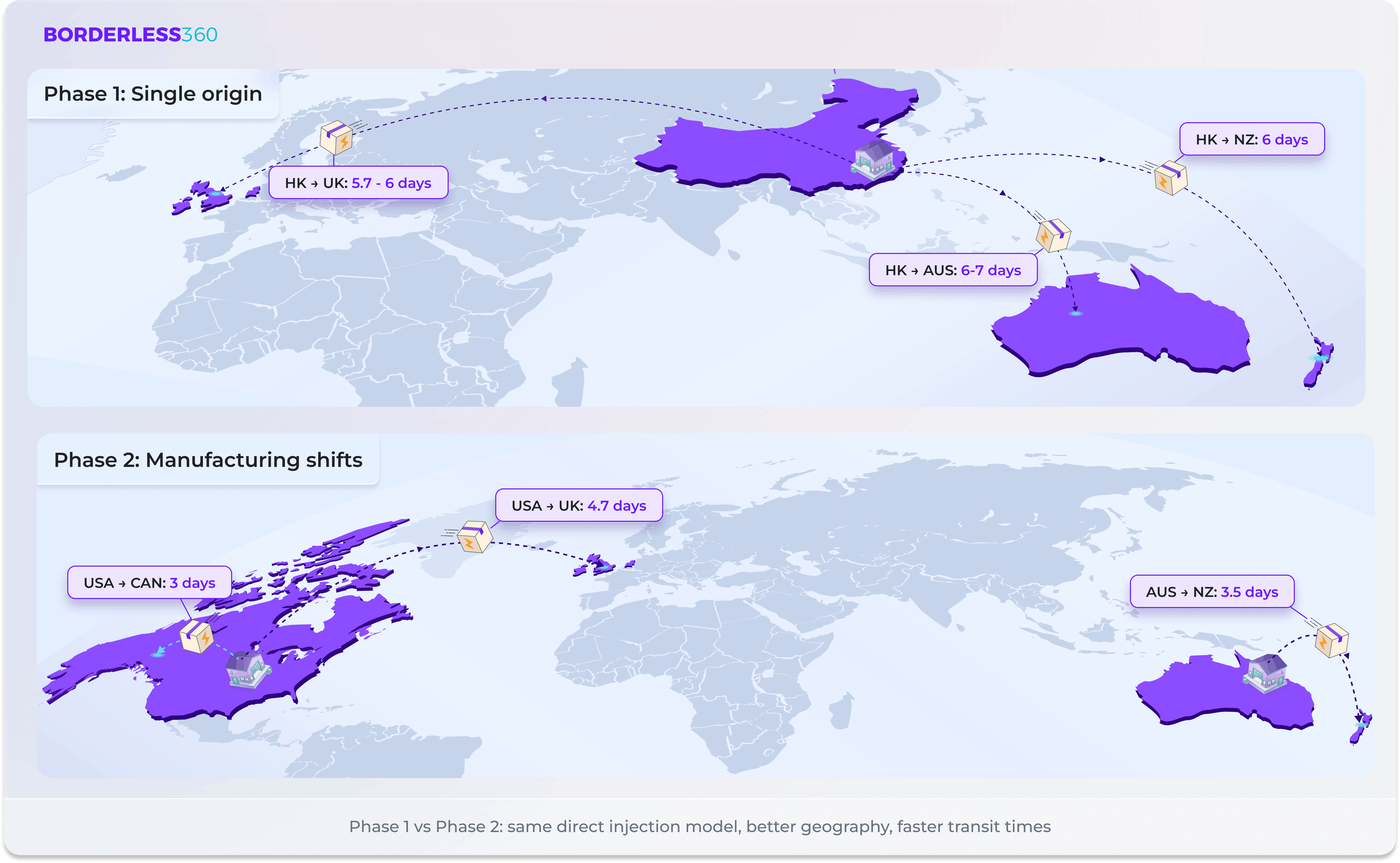
Now, as their manufacturing shifts to the USA and Australia, the opportunity gets bigger. Direct injection lanes from these new locations are even faster. USA to UK drops to 4.7 days. Australia to New Zealand, 3.5 days. USA to Canada, 6 days DDP.
Instead of retreating to a fragmented setup with a different 3PL in each country, they're doing exactly what grew their business, direct injection at speed, just from new manufacturing locations. With fulfilment in two countries and direct injection covering the international lanes, the infrastructure is already proven to push tens of thousands of orders a month into each market.
The supply chain evolved with them at every stage. That's the difference between treating logistics as a cost centre and treating it as a growth advantage.
The bottom line
The brands navigating this shift well aren't treating it as a logistics problem. They're treating it as a moment to rebuild their supply chain around a model that scales — direct injection from new manufacturing locations, full visibility at every stage, and a single provider with infrastructure across the lanes that matter. That's what separates the brands that grow through the transition from the ones that just survive it.
One global provider with end-to-end direct injection infrastructure. From warehouse pickup, through first-mile freight, customs clearance, airline uplift, destination airport collection, and lodgement directly into final-mile carrier networks. No handoffs to third parties. No gaps in visibility. Every stage owned and tracked.
The supplement brands that figure this out first won't just keep up. They'll pull ahead.
Ready to Transform Your Logistics?
Book a call to optimise costs, boost efficiency, and enhance satisfaction!
