
Timing of expansion
International expansion often fails not because the idea is wrong, but because the underlying logistics system was never designed to stretch. Before adding a new destination, it’s worth stepping back and evaluating whether your current setup will scale cleanly, or whether it will simply magnify existing inefficiencies.
The following questions are designed to surface issues that are easy to overlook when volume is low, but costly once expansion begins.
An Evaluation Framework Before You Expand
Before adding a new market, answer three questions honestly:

If the answer is "it depends" or requires chasing multiple partners across time zones, you have an accountability gap. That gap will widen with every market you add.

This tests both tracking visibility and internal process. If the answer is "when the customer complains," your system is reactive, and your support team will pay for it at scale.

This is the real test. If yes, your logistics is designed to scale. If not, if it requires new partners, new systems, new inventory commitments, then you're not expanding. You're rebuilding every time.
If you hesitated on any of these, expansion will expose it.
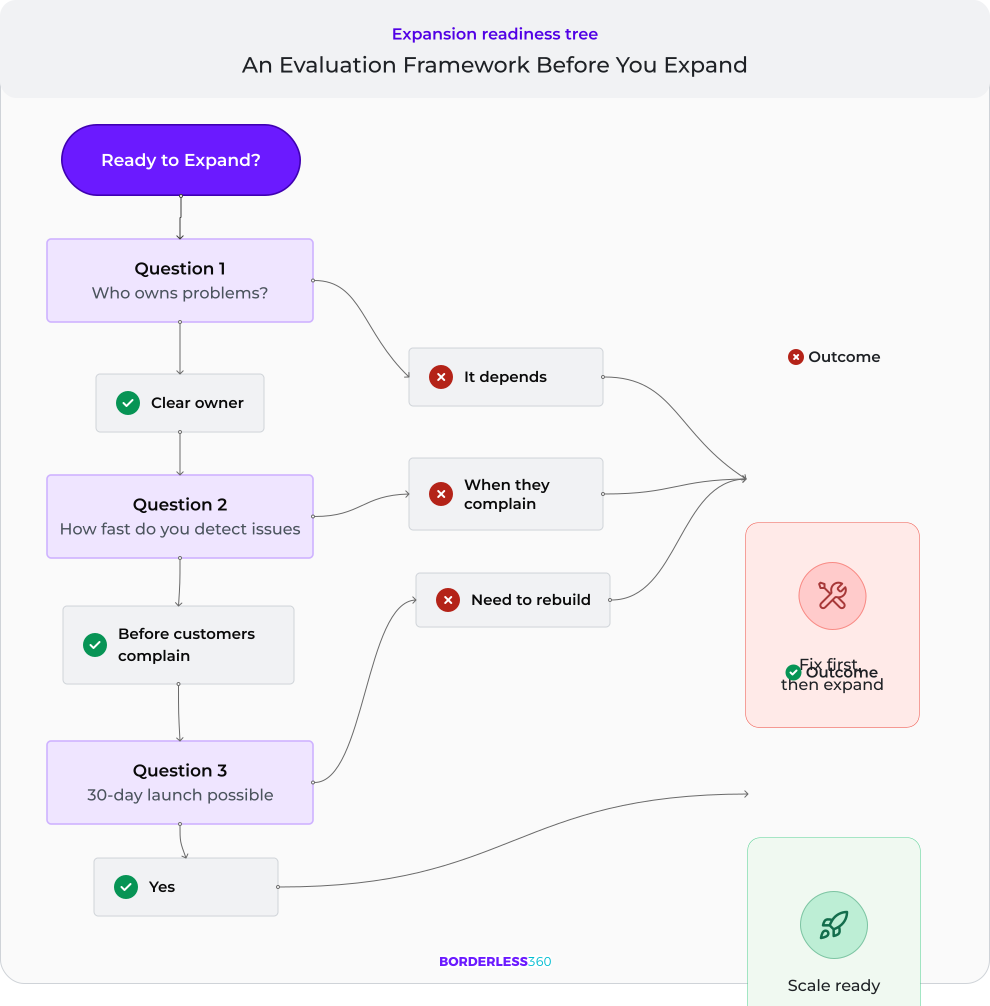
Taken together, these questions help brands distinguish between logistics that can support long-term growth and logistics that will need to be rebuilt under pressure. If expansion requires re-engineering the stack each time, growth will always feel harder than it should.