
China-to-world is not about geography. It is about structure.
When brands struggle to expand, it is rarely because a specific country is too complex. It is because their logistics system was never designed to operate across borders in a coherent way. China simply exposes that reality faster than most regions, because it sits at the source of the supply chain and touches every downstream decision.
To “pass” the China test does not mean shipping cheaply or quickly from China at all costs. It means being able to move inventory from manufacturing to customers in a way that is predictable, visible, and repeatable. It means understanding where inventory should live, how orders flow, and who owns each part of the journey when something goes wrong.
If your logistics can handle China-to-world cleanly, it can handle almost any expansion scenario. If it cannot, expansion will expose that weakness quickly, whether the next destination is the UK, the US, Europe, Australia, or beyond.
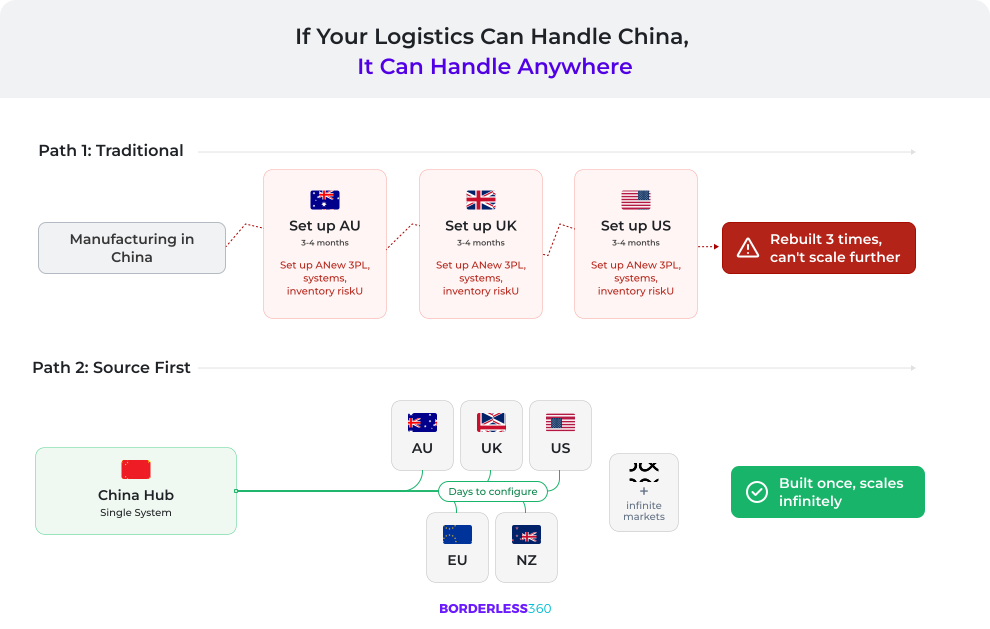
This is why fixing China fixes the future. When you design logistics from the source, you are no longer building a new supply chain every time you add a market. You are extending a system that already knows how to scale.
The brands that grow sustainably are not those with the cheapest shipping rates. They are the ones with logistics systems designed for growth, resilience, and change.
Where Borderless360 fits
Designing logistics from the source is not theoretical. It requires expertise on the ground, people who process ecommerce exports daily, and the ability to operate across regions as a single system.
This is exactly the problem Borderless360 was built to solve.

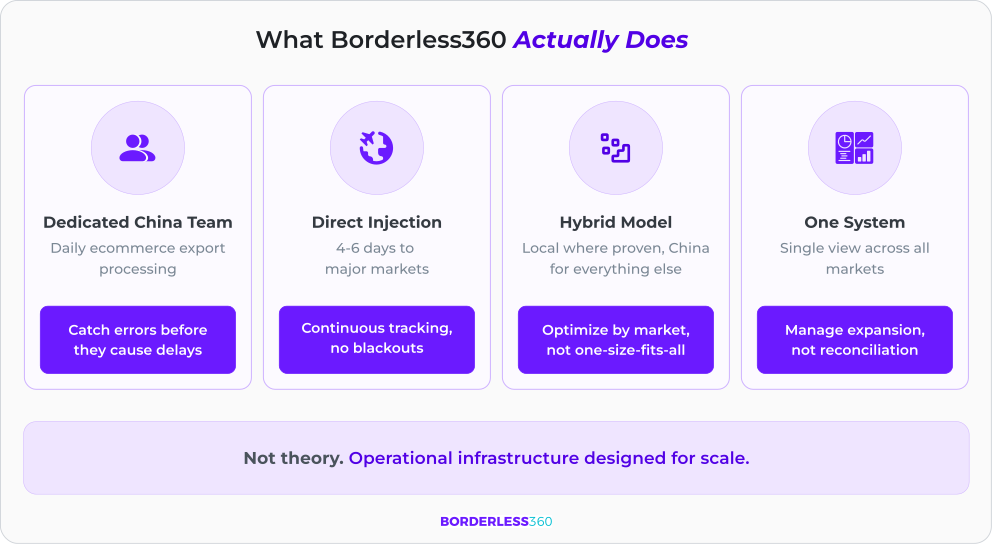
We don't broker exports through third parties. Our team in China processes ecommerce shipments daily, catching documentation issues before they cause delays, resolving exceptions same-day, and building the pattern recognition that comes from doing this work consistently, not occasionally.

Orders ship from our China fulfillment centre directly into local delivery networks. This translates into 4-6 days to the UK, US, Europe, Australia, and New Zealand. Continuous tracking from dispatch to doorstep. No mid-journey blackouts, no finger-pointing between carriers.

We're not asking you to move everything to China. Keep local fulfillment where volume and speed expectations justify it. Use China as the flexible node for new markets, long-tail destinations, and demand you haven't proven yet. Localise strategically once you have data.

Inventory visibility, order routing, and tracking live in one place, whether you're fulfilling from Australia, China, or both. Your ops team manages expansion, not reconciliation.
For brands manufacturing in China and looking to expand without rebuilding their logistics every time, the question is no longer whether China is complex. It's whether your logistics is designed to scale from the source.
Ready to pressure-test your current setup? Our team can walk you through a logistics readiness assessment and show you what a China-to-world model would look like for your business.