The additive approach
Most brands expand by adding solutions to immediate problems, not by redesigning the system.
In practice, this often looks like:


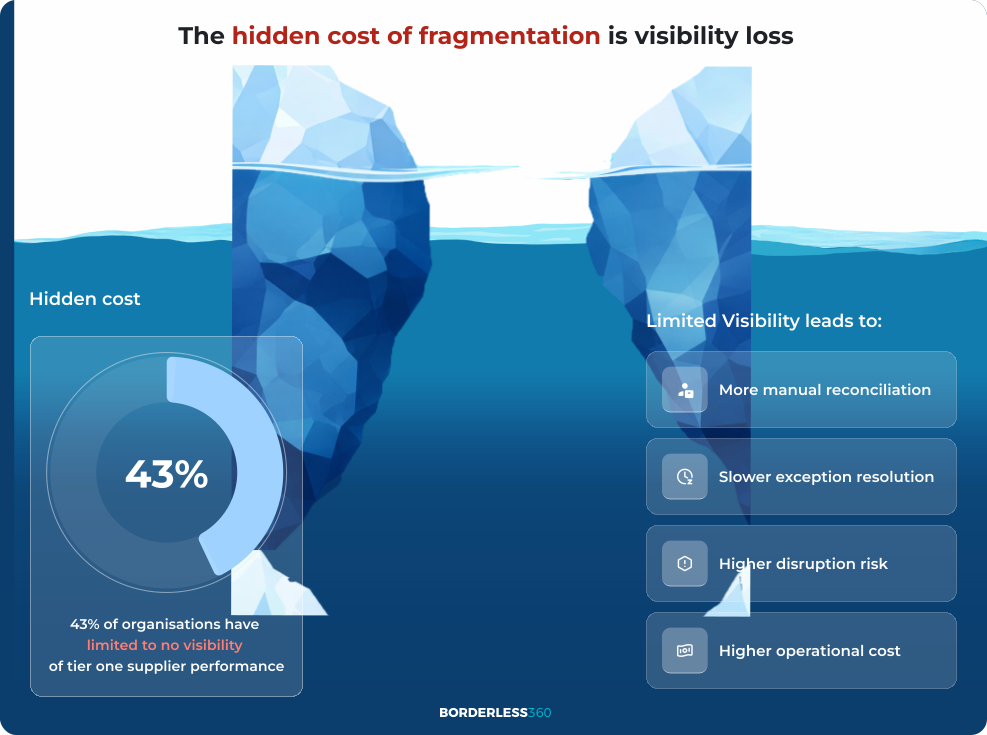
None of these decisions feel significant on their own. Each solves a real, short-term need. But together, they create a structure where responsibility is split, data is duplicated, and no single system reflects the full journey of an order.
This is what makes fragmented logistics expensive. Not because any one provider is inefficient, but because the overall system relies on manual coordination, reconciliation, and workarounds to function.
According to Deloitte, fragmented supply chains are significantly more expensive to operate due to duplicated processes, manual reconciliation, and poor visibility. These costs rarely appear in headline shipping rates, but they show up in labour, delays, and lost revenue.

Monday morning. Your ops lead opens five tabs: the 3PL portal for AU stock levels, a shared Google Sheet tracking the China shipment, email threads with the freight forwarder about warehouse booking slots, WhatsApp to chase the factory on a delayed production run, and Shopify where weekend orders are waiting and two customers have already emailed asking for tracking updates. She spends an hour stitching together information that should live in one place. By the time she has a clear picture, half the morning is gone and she hasn't solved a single problem yet. She's just figured out what the problems are.
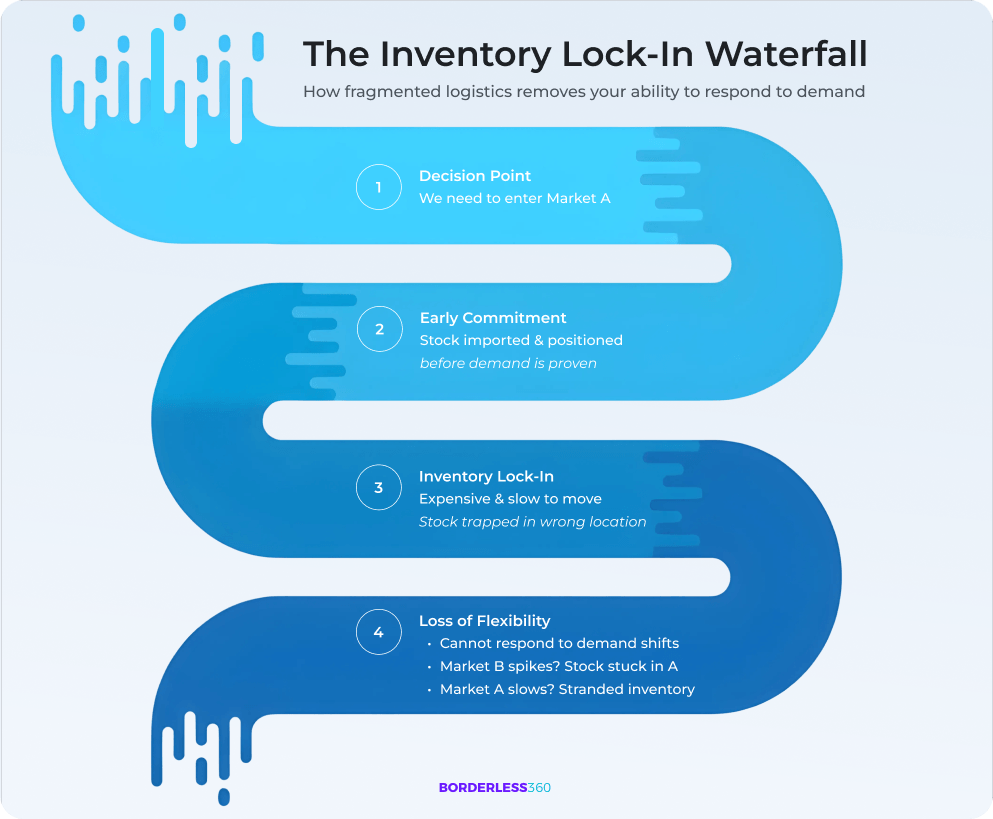
Secondly, in fragmented setups, inventory is locked into individual countries early, often before demand is proven. Once stock is imported and positioned locally, it becomes expensive and slow to move. This removes the brand’s ability to respond dynamically to demand shifts across regions.
As a result, teams are forced to choose between over-committing inventory to new markets or delaying expansion altogether. Neither option is particularly attractive. Peak season magnifies everything. Fragmented systems do not degrade gracefully under pressure.This is why the second expansion often feels disproportionately difficult. It exposes weaknesses that were already present.