E-commerce is set to make up 22% of global retail sales by 2023
Small and medium-sized enterprises (SMEs) with ambitions to scale up often face difficulties when navigating into new markets, with many complex and diverse areas needing attention. As an added pressure, each country has its own network of fulfillment and last-mile delivery partners to manage.
We have outlined a number of challenges e-commerce retailers, or e-tailers, often face when going global. This guide will take a look at how, with the right solution, complexity and risk can be easily mitigated.
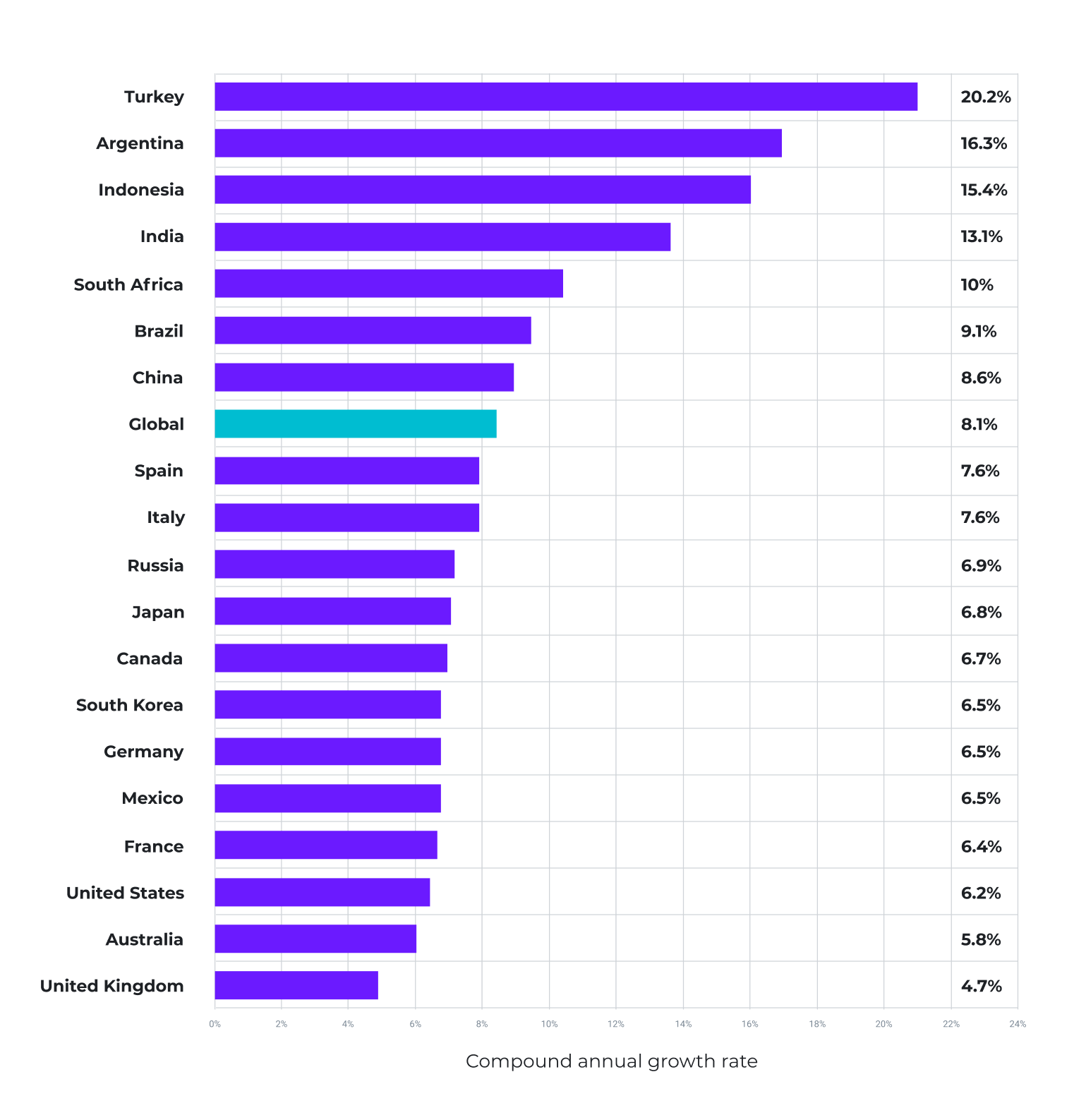
Retail e-commerce sales CAGR forecast in selected countries from 2020 to 2024
To help you get started, lets review a few challenges companies face when going global
Multiple Timezones
If you plan to scale your business across borders you will undoubtedly oversee operations and fulfillment in more than one time zone. Get time on your side by partnering with companies that can offer in-country services so you can support your customers around the clock.
Multiple Suppliers
As businesses scale, managing production flows from multiple suppliers such as factories in China, to several regions exposes a supply chain to inefficiencies in both timing and cost. Each supplier has its own set of charges and transportation costs vary considerably. Finding a strong logistics partner to handle these flows will help a business maintain its competitiveness in each region and grow market share.
Customs & Duties
Navigating disparate customs laws can become challenging in a global e-commerce setting. Data must be provided, which typically includes a description of the goods, their value and destination, and importantly, the chain of responsibility. Customs administrations require this information to perform risk assessments with additional data required at a later stage.
Additionally, the way each country assesses duties and taxes differs and is subject to change at any time. For instance, Brexit changed the way the UK collects value-added tax (VAT) to ensure that goods from both the EU and non-EU are treated in the same way. In a nutshell, online marketplaces (OMPs) and/or businesses that sell goods into the UK must register with HM Revenue and Customs (HMRC), collect VAT from customers, and remit VAT to HMRC quarterly.
Multiple Platforms
SME's are often faced with costly integrations across multiple different platforms in order to support different courier networks as they scale. Managing last-mile deliveries with DHL to various EU countries while juggling in-country networks in Australia to serve your home region is not easy. The complexities become evident when expanding into 3 or 4 different markets.
Multiple Banks
Additionally, when managing orders across several localized platforms, e-tailers often find themselves managing transfer fees and charges from multiple banks to support transactions in different locations, adding another layer of complexity.
Local Staff
Staying on top of pricing structures, documentation, financials and timings is a full time job. To scale a business globally, you will almost certainly need to hire local staff to manage each market.
All of this results in you spending less time focusing on growing your business. When all these ducks are in a row, it’ll be time to find a software management system - ideally cloud-based so you can work from anywhere - that lets you monitor and control your stock, orders and fulfilment as it happens.
A Peerless Research Group survey demonstrates the critical role that software is taking in the ongoing development of the e-commerce marketplace. It found 48% of companies investing in a wide range of supply chain management software were looking to streamline order management and 32% specifically cited boosting their e-commerce fulfillment operations.